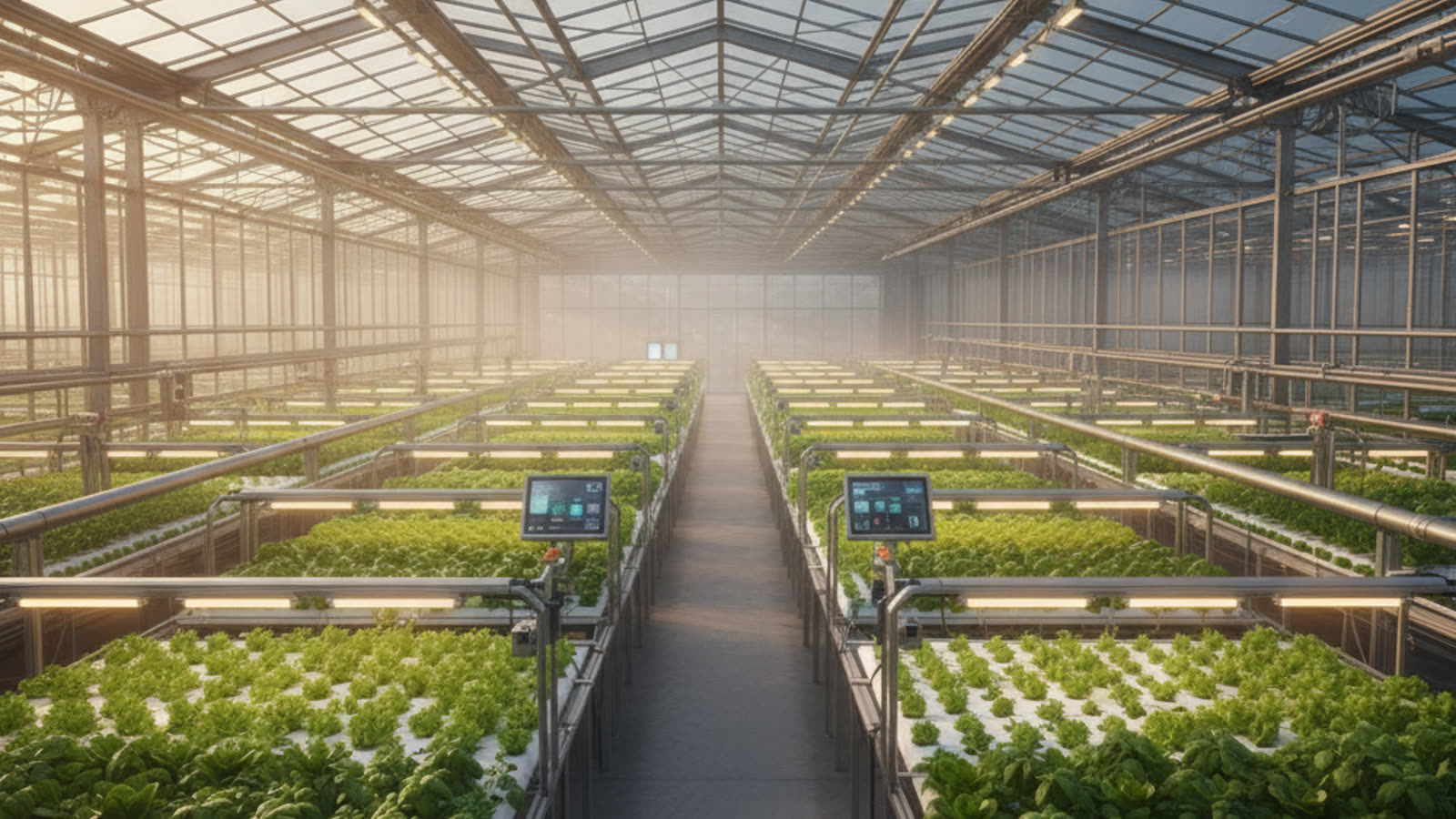
Hydroponics 101
What is Hydroponic Farming? A Complete Guide for Lebanon
Hydroponic farming grows plants without soil using nutrient-rich water. Learn how it works, why it uses 90% less water, and why it's transforming agriculture in Lebanon.
If you've ever watched a head of lettuce wilt three days after you bought it, or paid premium prices for imported herbs that tasted of nothing, you've experienced the limits of traditional agriculture. Hydroponic farming is the alternative: grow food without soil, with precise control over every variable, using a fraction of the water.
This guide explains what hydroponic farming is, how it works, and why it matters for Lebanon specifically.
What is hydroponic farming?
Hydroponic farming is the practice of growing plants without soil, using nutrient-enriched water to deliver everything plants need directly to their root systems.
Instead of soil, plants sit in:
- Net pots with their roots dangling into a water channel
- Rockwool cubes that hold seedlings stable while water flows past
- Coco coir or perlite in raised growing trays
- Clay pebbles in flood-and-drain systems
The water itself isn't plain water. It's a carefully balanced nutrient solution containing nitrogen, phosphorus, potassium, calcium, magnesium, and trace elements. The pH and electrical conductivity (EC) are monitored and adjusted continuously so plants always get exactly what they need.
The result: plants grow 30–50% faster than they would in soil, using 80–95% less water, with zero pesticides required because the controlled environment eliminates most pests and diseases.
The basic principle: roots want water, oxygen, and nutrients
A common misconception is that plants need soil. They don't. What plants actually need from soil is:
- Water
- Dissolved nutrients
- Oxygen at the root zone
- Physical support
Hydroponics provides all four without the soil. Water and dissolved nutrients are obvious. Oxygen comes from the air gaps in the system or from oxygenated water. Physical support comes from the growing medium and the system architecture itself.
Once you remove soil, you also remove most of agriculture's biggest problems:
- Soil-borne diseases disappear
- Weeds disappear
- Most insect pests disappear (especially in indoor setups)
- Water loss to drainage and evaporation drops dramatically
- Land requirements shrink because you can stack growing systems vertically
The most common hydroponic systems
There are six main hydroponic system types. The right choice depends on what you're growing, your scale, and your budget.
1. NFT (Nutrient Film Technique)
A thin "film" of nutrient-rich water flows continuously through long, slightly tilted channels. Plant roots sit in the channels, partly submerged, partly exposed to air. Excellent for leafy greens, herbs, and strawberries.
This is the system GrowLeb uses for our lettuce and herb production. It's water-efficient, modular, easy to scale horizontally, and gives roots maximum oxygen access.
2. Deep Water Culture (DWC)
Plants sit on a floating raft above a tank of nutrient solution. Roots dangle into the water; air pumps oxygenate the solution. Common in research and craft farms. Reliable but harder to scale.
3. Drip systems
Individual emitters drip nutrient solution onto each plant's root zone. Common in commercial greenhouses for tomatoes, peppers, and cucumbers. Versatile, but uses more water than NFT or DWC.
4. Ebb and flow (flood and drain)
The growing tray periodically floods with nutrient solution, then drains back into a reservoir. Good for hobbyists and small commercial setups.
5. Aeroponics
Roots dangle in the air and are misted with nutrient solution. Most water-efficient method, but technically demanding. Used in research and high-end vertical farms.
6. Wick systems
Passive — a wick draws solution from a reservoir to the roots. Simple but slow; only suitable for small plants and personal use.
For Lebanon's commercial production needs (B2B supply to restaurants and retail), NFT and drip are the two systems with proven economic viability at scale.
Why hydroponic farming uses 90% less water
This is the headline statistic, and it's worth understanding why it's true.
In a traditional field, you irrigate the soil. Water:
- Soaks past the root zone (gone)
- Evaporates from the soil surface (gone)
- Runs off if the soil is saturated (gone)
- Is taken up by weeds (gone)
- Is finally taken up by your crop (a tiny fraction)
Estimates suggest field crops use only 10–20% of applied irrigation water. The rest is lost.
In a hydroponic system, water flows in a closed loop. The plant's roots are submerged or sprayed; what they don't absorb returns to the reservoir and is reused. The only "losses" are:
- Water transpired by the plants themselves (this is unavoidable; it's how plants pull nutrients up)
- Tiny amounts lost when the system is cleaned
Net result: a hydroponic farm produces the same kilogram of lettuce using a tenth of the water that a field farm uses. For a country facing chronic water scarcity, this is not an academic improvement.
Why hydroponic farming matters for Lebanon
Lebanon has a specific set of agricultural problems that make hydroponics particularly relevant:
1. Import dependency
Over 80% of Lebanon's fresh produce is imported. This means foreign currency outflow, supply chain fragility (anything that disrupts ports disrupts food supply), and prices that fluctuate with Lebanese pound volatility.
Local hydroponic production removes that dependency for the categories it covers (leafy greens, herbs, microgreens, certain fruits).
2. Water scarcity
Lebanon is officially water-scarce. Aquifers are over-pumped, surface water is polluted, and seasonal rainfall is increasingly unreliable. Traditional irrigation is wasteful in a country that can't afford waste.
3. Limited arable land
Lebanon's terrain limits how much land can be productively farmed. Hydroponic greenhouses produce 5–10 times more food per square meter than open-field agriculture, and they can be built on land that wouldn't support traditional farming.
4. Year-round production
Lebanese open-field farms have seasonal limitations. Restaurants and supermarkets either deal with seasonal gaps or import. Climate-controlled hydroponic greenhouses produce 365 days a year, eliminating those gaps entirely.
5. Quality consistency
Restaurants and supermarkets need predictable supply. Field-grown produce varies week to week with weather; hydroponic produce, grown in controlled conditions, has week-to-week consistency that professional buyers actually need.
What gets grown hydroponically (and what doesn't)
Hydroponics works best for plants with high water content, fast growth cycles, and shallow root systems:
- Lettuce varieties (Lollo Verde, Lollo Rosso, Romaine, Oakleaf, Sucrine)
- Fresh herbs (basil, mint, parsley, coriander, oregano, thyme, rosemary, dill, chives)
- Microgreens (radish, pea shoots, mixed)
- Spinach, arugula, chard
- Tomatoes, peppers, cucumbers, strawberries (in larger drip-system greenhouses)
It's less practical for:
- Root vegetables (potatoes, carrots) — root growth is constrained
- Tree crops (olives, citrus) — too long-lived, too large
- Grains (wheat, rice) — economically unviable at hydroponic costs
For Lebanon, the leafy greens and fresh herbs categories are the high-value, high-demand markets where hydroponics outcompetes everything else.
How GrowLeb does it
GrowLeb operates a precision NFT hydroponic platform in Lebanon, producing premium leafy greens, herbs, and microgreens for restaurants, caterers, supermarkets, and distributors.
We grow:
- 20+ varieties of lettuce and leafy greens
- 20+ fresh herb varieties including the full Lebanese kitchen palette (mint, parsley, coriander, zaatar/thyme, oregano)
- Microgreens and value-added products
Every plant is grown in a controlled environment with monitored pH, EC, temperature, humidity, CO₂, and light. We harvest year-round with consistent quality, no pesticides, and a 14-day shelf life.
If you're a restaurant, caterer, supermarket, or distributor looking for reliable hydroponic produce supply in Lebanon, explore our partnership program or browse what we grow.
The bottom line
Hydroponic farming is no longer experimental. It's a proven, scalable, water-efficient way to produce premium fresh produce. For a country like Lebanon, with import dependency, water scarcity, and limited land, it isn't just a nice-to-have. It's how Lebanese restaurants, retailers, and consumers will increasingly get their food in the next decade.
If you want to dig deeper, our Hydroponics in Lebanon hub covers everything from system types to specific crops to economic models.
Frequently Asked Questions
Common questions
What is hydroponic farming in simple terms?
+
Is hydroponic produce healthy and safe?
+
How much water does hydroponic farming save?
+
Is hydroponic farming viable in Lebanon?
+
Need a reliable hydroponic supplier in Lebanon?
GrowLeb supplies premium leafy greens, herbs, and microgreens to restaurants, retailers, and distributors across Lebanon. Year-round, no pesticides, 14-day shelf life.